


AIRMEC: AI for refining the molecular endometrial cancer classification

Notable work

Publications

  1. 2026 Voorspelling van het risico op afstandsmetastasen bij endometriumkanker met het multimodale deep learning-model HECTOR S. Volinsky-Frémond et al., Nederlands Tijdschrift voor Oncologie 23, 97–105
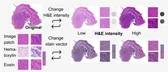
  2. 2026 A protocol for evaluating robustness to H&E staining variation in computational pathology models Lydia A. Schönpflug et al., Journal of Pathology Informatics
  3. 2026 Assessing Foundation Models for Computational Pathology in Endometrial Cancer Sarah Volinsky-Fremond et al., medRxiv 2026.05.22.26353897
  4. 2026 Deep Learning-Based Screening for POLE mutations on Histopathology Slides in Endometrial Cancer Nikki van den Berg et al., medRxiv 2026.02.06.26345335
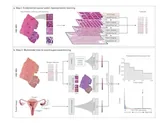
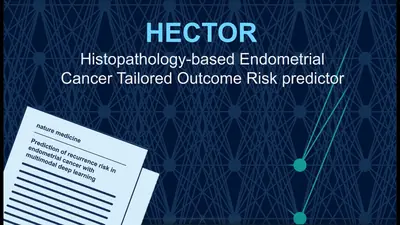
  5. 2024 Prediction of recurrence risk in endometrial cancer with multimodal deep learning Volinsky-Fremond, et al., Nat Med 30, 1962–1973
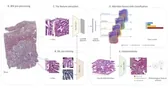
  6. 2023 Interpretable deep learning model to predict the molecular classification of endometrial cancer from haematoxylin and eosin-stained whole-slide images: a combined analysis of the PORTEC randomised trials and clinical cohorts Fremond, Sarah et al. The Lancet Digital Health, Volume 5, Issue 2, e71 - e82

Leapfrogging Initiative

Democratizing Cancer Diagnostics with AI in Low- and Middle-Income Countries

Our Vision

We are bringing together a global coalition of experts to co-author a joint opinion paper on a topic of growing international relevance:

Can artificial intelligence leapfrog diagnostic infrastructure and democratize cancer diagnostics in low- and middle-income countries (LMICs)?

This paper aims to outline a vision for how AI, particularly deep learning, can enable rapid adoption of advanced diagnostic technologies in LMICs, bypassing resource-intensive intermediate steps and transforming the diagnostic journey for cancer patients in under-resourced settings.

People Involved

This initiative is led by the AIRMEC team, in collaboration with experts in cancer diagnostics, clinicians and healthcare leaders in LMICs, researchers in artificial intelligence and digital pathology, and global health advocates.

Join our LinkedIn group!

Abstract

Leapfrogging Cancer Diagnostics: A Vision for AI-Driven Pathology in LMICs

The integration of deep learning (DL) into diagnostic pathology holds the potential to revolutionize healthcare in low- and middle-income countries (LMICs) by leveraging leapfrogging technology to bypass intermediate technologies and rapidly adopt advanced solutions like AI-driven pathology. In this work, we provide a vision of how a cancer patient's journey could be transformed through the use of AI in pathology and outline the tiered resources required for successful implementation in a low-resource setting. To ground this vision in reality, country experts from a variety of LMICs provide their commentary regarding the potential, feasibility, and limitations of the proposed approach. This commentary enables the identification of the most relevant AI use cases, highlighting both shared and diverging needs, as well as potential roadblocks. Ultimately, our findings aim to guide policymakers, healthcare providers, and technology developers in designing effective, context-specific AI adoption strategies in LMICs, fostering equitable access to advanced diagnostics and improved patient outcomes.


Team